
Canadian Cybersecurity Compliance FAQ: Bill C-8, SOC 2, ISO 27001, NIST CSF and CyberSecure Canada
Canadian organizations are facing a new cybersecurity compliance landscape. Bill C-8 has received Royal Assent, NIST CSF 2.0 is now the current framework, PCI DSS v4.0.1 is active, ISO/IEC 27001:2022 is the current ISMS standard, and buyers increasingly expect proof of security posture before contracts are signed. This FAQ explains what Canadian businesses, boards, vendors, associations, and regulated organizations need to know, and how to turn cybersecurity obligations into defensible evidence.
ISO/IEC 27001:2022 is the international standard for an information security management system, or ISMS. It defines requirements for establishing, implementing, maintaining, and continually improving information security management. For Canadian organizations, ISO 27001 is often used to satisfy enterprise procurement, board assurance, insurance, and vendor due diligence requirements. Preparation should begin with scope, asset inventory, risk assessment, risk treatment, Statement of Applicability, policies, access control evidence, supplier controls, incident response, internal audit, and management review. Datarisk should position this as a readiness and evidence-building exercise, not merely a certification project.
NIST CSF 2.0 is a practical framework for managing cybersecurity risk. It can be used by organizations of any size, sector, or maturity to understand, assess, prioritize, and communicate cybersecurity work. It is not a certification scheme. Its value is that it gives executives, boards, IT leaders, vendors, and auditors a shared language for risk. Canadian organizations can use NIST CSF 2.0 to build a baseline assessment, compare current and target maturity, prioritize controls, and prepare evidence for insurers, buyers, and regulators. Datarisk should map Verify findings to NIST CSF 2.0 outcomes.
SOC 2 is an assurance report used mainly by service organizations that need to prove controls over systems and data. It is based on AICPA Trust Services Criteria for security, availability, processing integrity, confidentiality, and privacy. ISO 27001 certifies an information security management system; SOC 2 reports on whether controls are suitably designed and, for Type 2 reports, operating effectively over time. Canadian SaaS firms, fintechs, EdTech vendors, health technology providers, and outsourced service providers often need SOC 2 because customers ask for it before signing contracts. Datarisk should offer SOC 2 readiness, gap assessment, evidence preparation, and remediation support.
The CIS Critical Security Controls are a prioritized set of practical cybersecurity safeguards. They are useful when an organization wants an action-oriented control roadmap rather than a broad governance framework. CIS says its latest version, CIS Controls v8.1, includes updated alignment to evolving industry standards and frameworks, revised asset classes and safeguards, and a Governance security function. For most small and mid-sized organizations, the starting point is asset inventory, software inventory, secure configuration, vulnerability management, access control, MFA, backups, logging, awareness training, and incident response. Datarisk should present CIS as an implementation roadmap that can support audits and insurance readiness.
PCI DSS applies to entities that store, process, transmit, or can affect the security of cardholder data or sensitive authentication data. The PCI Security Standards Council describes PCI DSS as a baseline of technical and operational requirements designed to protect payment account data. Evidence usually includes scope definition, network diagrams, policies, access control, MFA, vulnerability management, logging, secure development practices, incident response, and approved scanning where required. Datarisk should not present PCI as a generic checklist. It should explain scoping, evidence, quarterly scanning, payment-page risk, cloud service providers, and how merchants can avoid turning a small cardholder environment into a large audit problem.
CyberSecure Canada remains relevant for small and medium-sized businesses that want a recognized Canadian cybersecurity baseline. ISED states that, as of March 31, 2023, it is no longer the program authority and directs users to the Standards Council of Canada for current program information. The Standards Council says CyberSecure Canada is intended to raise the cybersecurity baseline among Canadian SMEs, increase consumer confidence, promote standardization, and help SMEs compete. Datarisk should update this section immediately and explain the relationship among CyberSecure Canada, CAN/DGSI 104, CCCS baseline controls, Verify assessments, and customer-facing trust evidence.
Bill C-8, An Act Respecting Cyber Security, received Royal Assent on June 16, 2026. It strengthens Canada’s telecommunications security regime and introduces the Critical Cyber Systems Protection Act. The law creates a framework requiring designated operators in finance, telecommunications, energy, and transportation to protect critical cyber systems. The Telecommunications Act amendments take immediate effect, while the Critical Cyber Systems Protection Act will be implemented gradually. For affected organizations, the practical work includes cyber security programs, incident reporting readiness, supply-chain risk controls, evidence of reasonable safeguards, and executive accountability. This should be the top new Datarisk FAQ item.
Bill C-36 is primarily a privacy and consumer data bill, so the full compliance discussion belongs on Managed Privacy Canada. But Datarisk should cover the security evidence. The proposed PPCDA would require physical, organizational, and technological safeguards proportionate to the sensitivity of personal information. It would also require breach reporting where there is a real risk of significant harm, individual notification, records of every breach of security safeguards, and service-provider notification to the controlling organization. Datarisk should use this section to position breach readiness, security safeguards, vendor controls, incident records, and evidence-based security assessments.
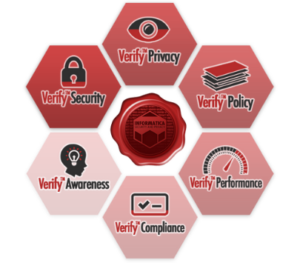
Enterprise customers increasingly ask vendors to prove security before contracts are signed. Typical evidence includes a recent cybersecurity assessment, SOC 2 readiness or report, ISO 27001 status, penetration-test summary, vulnerability-management process, MFA policy, backup and recovery evidence, incident-response plan, supplier-risk process, privacy/security policies, cloud security controls, and breach-notification commitments. The point is not to send a pile of documents. The point is to provide credible, current, well-organized evidence that answers the buyer’s risk questions. Datarisk should connect this answer directly to Verify, the assessment portal, remediation roadmaps, and Statement of Trust positioning.
The Canadian Centre for Cyber Security created the Baseline Cyber Security Controls for small and medium organizations to help them get practical value from limited cybersecurity resources. The guidance says the controls are intended for organizations with fewer than 499 employees and encourages organizations to put as many controls in place as possible. The Cyber Centre frames this as an 80/20 approach: get most of the practical security benefit from a manageable set of controls. Datarisk should turn this into a Canadian SME readiness pathway: assess, prioritize, remediate, train, monitor, and produce board or buyer-ready evidence.
Bill C-22, the proposed Lawful Access Act, matters most to electronic service providers, telecommunications providers, messaging services, cloud providers, and platform operators that may receive lawful access requests. Government materials say Part 2 does not create new interception authorities, but would require selected electronic service providers to maintain capabilities to comply with existing legal orders. The bill also addresses subscriber information, transmission data, tracking data, computer data examination, and cross-border production requests. Datarisk should discuss this cautiously as a live cybersecurity, privacy, encryption, logging, architecture, and trust issue, not as a general obligation for every business.
Bill C-34, the proposed Safe Social Media Act, was introduced on June 10, 2026. It would establish new safety requirements for social media services and AI chatbot services, including risk identification, safety-focused and age-appropriate design, user guidelines, blocking and flagging tools, and public digital safety plans. This is not a general cybersecurity law for every organization. It matters for platforms, chatbot services, online services used by children, and organizations deploying AI systems that may create harm at scale. Datarisk should link this item to AI-Security.ca and AIrisk.ca, with a focus on AI risk assessment, abuse cases, logging, escalation, safety testing, and vendor assurance.
A vulnerability scan looks for known weaknesses. A penetration test attempts to exploit weaknesses under defined rules. A cybersecurity assessment reviews controls, governance, risk, evidence, policies, procedures, people, systems, vendors, and resilience. A cybersecurity audit evaluates evidence against a defined standard, framework, contract, or regulatory expectation. Buyers often ask for “a security audit” when they actually need a readiness assessment, a scan, a policy review, a vendor-risk package, or a board-level roadmap. Datarisk should own this explanation because it clarifies the buying decision and prevents prospects from shopping for the wrong thing.
Most organizations should perform a cybersecurity assessment at least annually, and sooner after major changes such as cloud migration, AI adoption, acquisition, new vendor relationships, ransomware exposure, major staffing changes, regulatory change, or enterprise procurement requests. Organizations in regulated or high-risk sectors should also perform targeted assessments before launching new systems, accepting sensitive data, joining supply chains, or renewing cyber insurance. Datarisk should connect this question to recurring Verify assessments, risk roadmaps, external and internal scans, staff education, and executive reporting. The page already refers to self-assessments, scanning, remediation roadmaps, and training; those elements should now be turned into a coherent assessment cycle.
A useful cybersecurity compliance roadmap should identify current risk, target framework, gaps, priorities, owners, deadlines, evidence, costs, and dependencies. It should cover asset inventory, access control, MFA, vulnerability management, endpoint protection, secure configuration, logging, backups, incident response, vendor risk, staff training, privacy/security safeguards, cloud controls, business continuity, and board reporting. It should also state what the organization will not do yet, and why. Datarisk should present Verify as the mechanism for turning a scattered set of controls into a defensible roadmap that can be shown to leadership, customers, insurers, and procurement teams.
Cyber insurers and enterprise buyers increasingly ask whether an organization can prove basic cyber hygiene. Common questions include MFA coverage, endpoint protection, backups, patching, privileged access, vulnerability management, incident response, employee training, vendor security, business continuity, and prior incidents. A structured assessment helps the organization answer those questions with evidence instead of improvisation. This is where Datarisk has a natural commercial advantage: it can make trust visible through assessment, reporting, remediation roadmaps, and professional attestation.